
04 Jul The Rise of AI-Powered Automation: Transforming the Future of Manufacturing
The Rise of AI-Powered Automation: Transforming the Future of Manufacturing
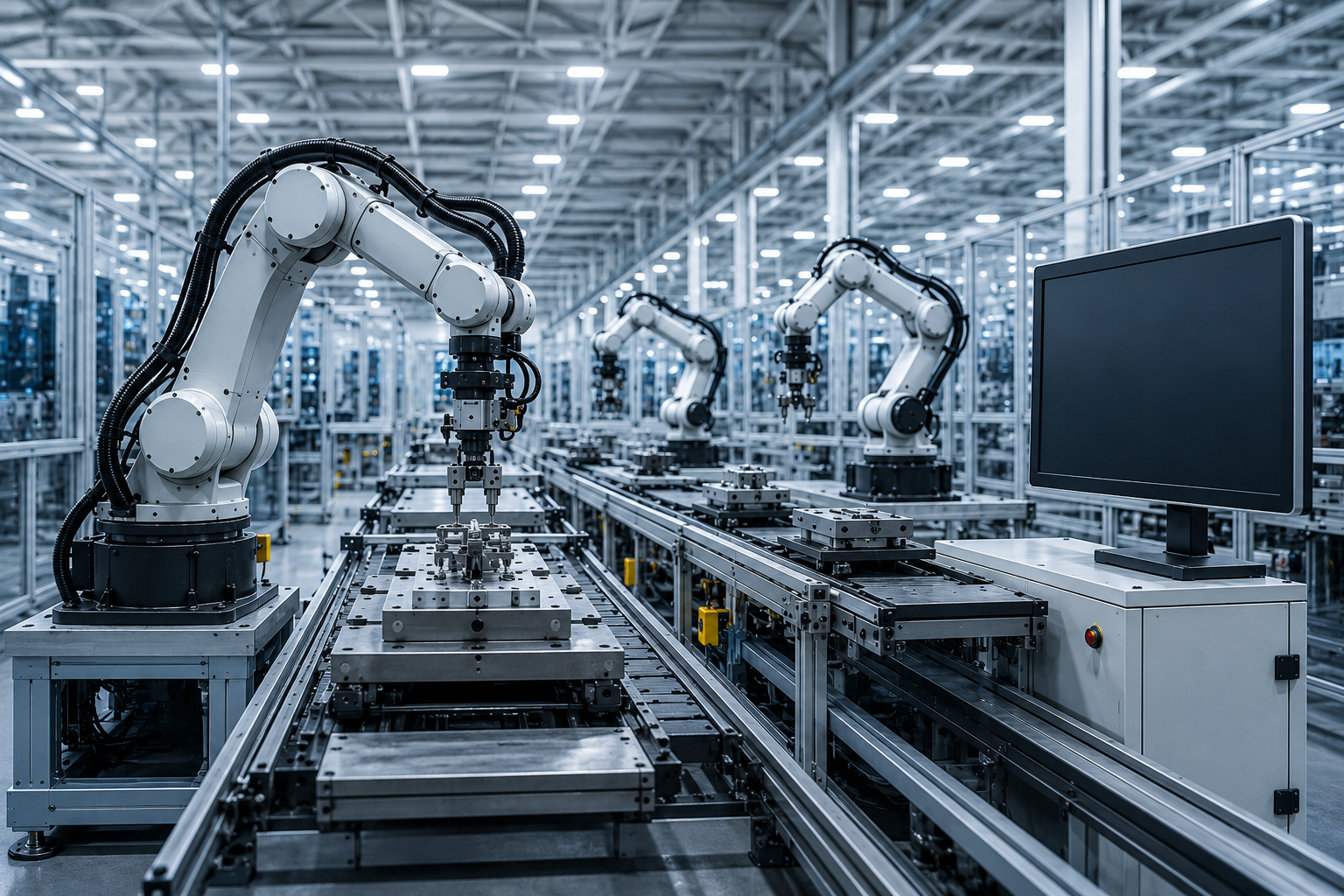
It is a well-known fact that manufacturing has constantly improved along with technological advancements. Whether through assembly line processes or CNC machining and robotics, all such developments have helped businesses increase efficiency and improve quality. Now, another revolution is taking place in the form of automation enabled by Artificial Intelligence (AI).
Unlike the old automation systems that were only capable of performing tasks according to programming, AI-enabled systems can actually learn through data, understand patterns, and make sound decisions. Such systems have helped companies build better factories that can adapt to different conditions.
What is AI-Powered Automation?
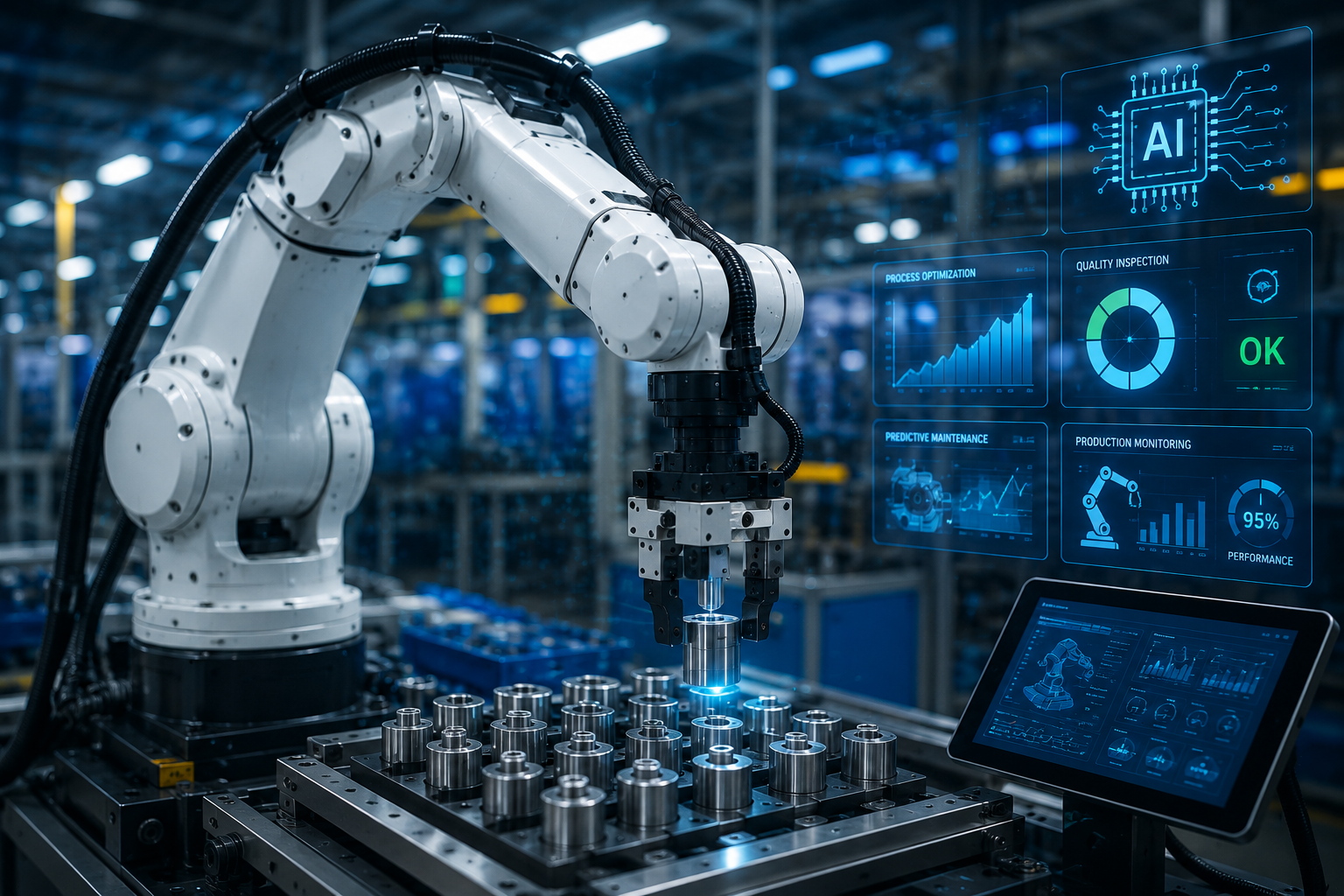
The concept of AI-enabled automation is a combination of artificial intelligence technology and industrial automation technologies like robots, machine vision, sensors, programmable logic controllers (PLC), and IIoT devices. With these technologies combined, production processes become capable of analysing data and adjusting themselves accordingly without much human involvement. Rather than using only programmed information, artificial intelligence systems are capable of detecting defects, anticipating malfunctions of equipment, scheduling production processes, and increasing efficiency of manufacturing processes.
Why Manufacturers Are Adopting AI
With globalization, increasing labour costs, and greater customer expectations, manufacturers have to incorporate AI-enabled automation in their processes. It is expected that organizations should produce top-notch products at a rapid pace with efficiency. AI offers the intelligence necessary for this purpose.
Following are some of the benefits offered by AI:
• Efficiency of manufacturing process through intelligent process optimization.
• Increased uptime via predictive maintenance.
• Impressively enhanced quality of products via AI-enabled inspection systems.
• Optimized utilization of machines with reduced idle time.
• Greater safety of the workplace through automation of repetitive and risky tasks.
• Data-driven and real-time decisions.
• Less expensive operations and greater return on investment.
AI in Robotic Machine Tending
The fastest developing area for AI is robotized machine tending. The industrial robots having the ability of using AI technology for vision purposes can easily distinguish different kinds of orientations of components and then load and unload CNC machines accordingly. The intelligent robots can accommodate various kinds of placements of components and missing components and also exchange information with the controller of the machine so that uninterrupted production is possible.
AI-Powered Quality Inspection
Traditional quality control measures were dependent on manual inspection methods, which were often laborious and subject to human error. AI-based visual inspection systems make use of high-definition cameras and deep learning techniques for inspecting products with extremely high accuracy. They have the ability to spot any flaws in terms of scratches, dimensional inconsistencies, surface defects, improper assembly, missing components, and many more, some of which might be too difficult to spot using the naked eye. The continuous learning process helps in making inspection systems highly accurate.
Predictive Maintenance: Preventing Downtime Before It Happens
Unexpected machine malfunctions may have major effects on production planning and profits. The predictive maintenance solution that uses AI employs the data obtained from the sensors to observe the state of the machinery continuously. Through the analysis of vibration levels, temperatures, pressures, energy usage, and operational parameters, AI can detect any problems before they happen. This enables scheduling the maintenance when it is most convenient rather than creating disruption in production operations.
Smarter Production Planning
In addition to this, artificial intelligence is also revolutionizing production planning through the analysis of previous production data, the level of inventory, demand for the products, and availability of machines. Such intelligent scheduling systems are capable of suggesting optimum sequences of production, efficient allocation of resources, and eliminating the bottlenecks in production.
Human and AI Working Together
While there are fears that AI will make workers redundant, the opposite is true. The use of automation through AI is meant to complement rather than undermine human know-how. This means that robots and intelligent machines take care of the monotonous, dangerous, and physically intensive tasks, whereas experts concentrate on supervising and improving processes. This arrangement not only ensures safety but also enables people to bring in their expertise.
The Future of Manufacturing
The future will see the rise of smart factories in which AI, robotics, machine vision, and machine connectivity all come together in harmony. As these technologies become cheaper and easier to adopt, manufacturing companies of any size will be able to utilize the benefits of intelligent automation. Companies who adopt AI technology now are better able to meet challenges, increase efficiency, ensure quality control, and keep up with the demands of the digital age.
At Strategi Automation Solutions, we offer our services to help manufacturers take the step towards the future by adopting the latest in industrial automation in the form of robotic machine tending, automatic material handling, machine vision systems, and automation solutions. Intelligent automation powered by AI is no longer a technology of the future; it is making its way into manufacturing companies today.