
12 Aug How Robotic Automation Improves Productivity and Reduces CNC Machine Downtime
How Robotic Automation Improves Productivity and Reduces CNC Machine Downtime : How Machine Tending Robots Improve CNC Productivity
Manufacturing industries are always striving to find methods that will enhance production, keep the quality constant, and reduce operational costs. CNC machines are known for high accuracy and repeatability, yet manual loading and unloading can still affect productivity. It is necessary for an operator to unload the finished product, load the raw product, and repeat the whole procedure during the production process. This will contribute to an increase in cycle time and idleness of the CNC machine between processes. Machine tending robot will assist in automation of these procedures and help manufacturers to utilize the CNC machine properly.
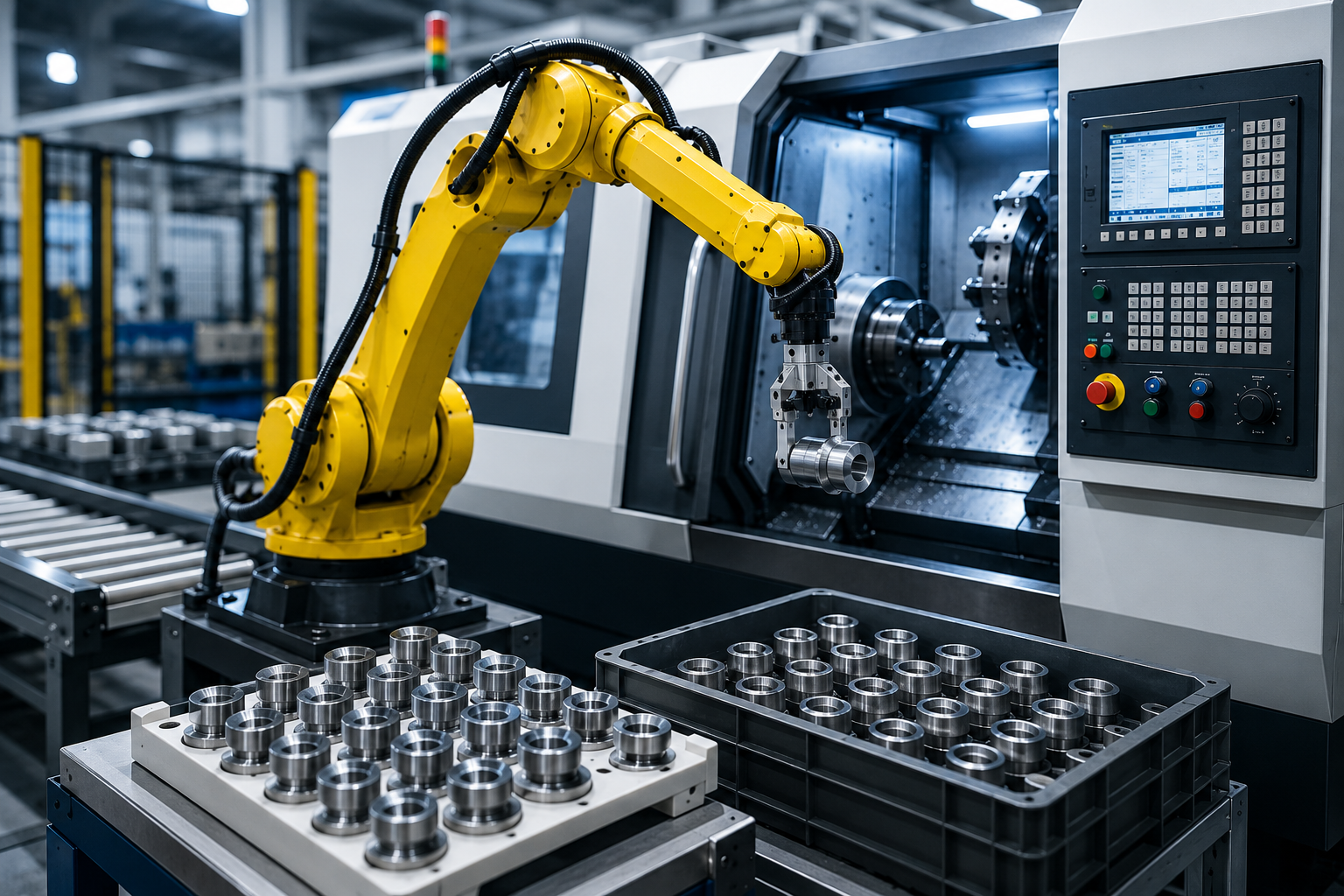
Machine tending robot can take a raw material from a tray or specific location, load it into the CNC machine, unload the finished material, and position it at a specified location. The whole process is done in accordance to a certain programming sequence and allows constant handling during the whole production. It eliminates the necessity of repetitive manual actions and assists in smooth production process. Industries like automotive, precision engineering, pump manufacturing, and heavy engineering can benefit from such a process in repetitive machining application.
CNC Machine Tending Helps Reduce Machine Downtime
The idling of a CNC machine might have a direct effect on the production schedule and costs incurred in production. In case of a manual process, the CNC machine will be idle while the operator unloads the component that was machined and prepares the next component for machining and loading the CNC machine. Even though this might only take a short time in each cycle, the total idle time that accumulates after repeating the process hundreds of times becomes relevant. CNC machine tending will decrease the idle time through automation of the loading and unloading process.
After machining by the CNC machine, the robot will unload the component that was machined and prepare the next component for machining by the CNC machine. The robot and the CNC machine will interact through programmed sequences and machine communication to ensure that there is a constant production cycle. Part detection sensors can be integrated in the process for verification of parts. This will ensure that there is a reliable production process without any delays.
Automation for CNC Machines
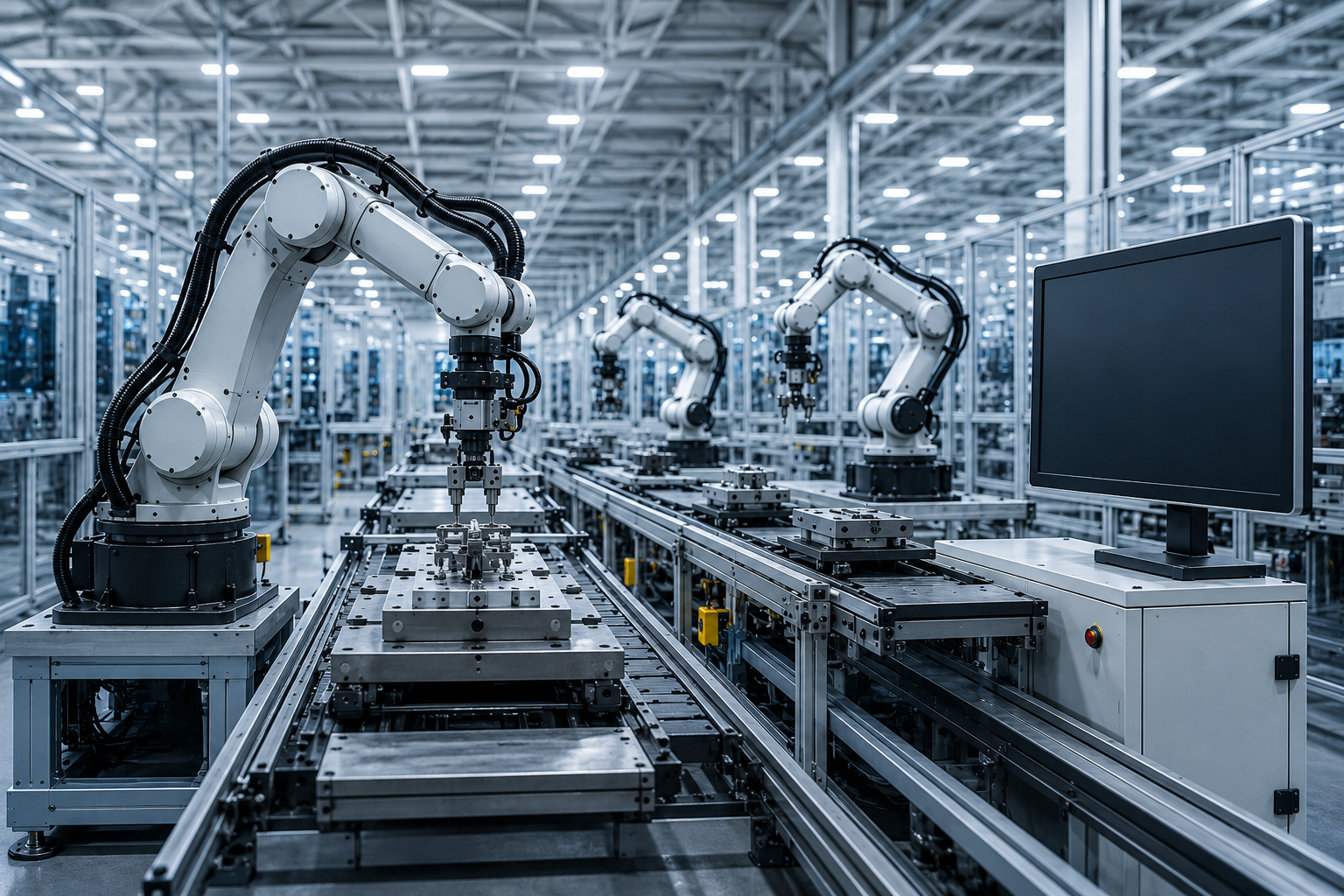
Integration of robots, CNC machines, grippers, fixtures, sensors, safety systems and control systems is necessary in the automation of CNC machines. In other words, instead of considering the robot and CNC machine as independent units, automation will allow them to work as one in the manufacturing process. The robot is able to retrieve raw materials, place them in the CNC machine, take out the manufactured components and move them to the next station. This will minimize unnecessary handling by the operator and make production orderly.
There is no specific design of a CNC automation system since it will depend on the application needs in a manufacturing facility. These include the size and weight of the components to be processed, CNC machine set up, machining cycle time, component production volume, robot payload, reach and available floor space. The system can be customized through the use of various grippers and fixtures for different components.
Robot Palletizer for Automated Material Handling
Automation can proceed even after a component is already fully machined using CNC machining. The components will need further inspection, sorting, storage, or shipment to another production area, and any manual effort during this phase will take extra time and effort. The robot palletizer is capable of stacking the components, trays, boxes, or the products in general based on a predetermined pattern. This way, it will be easier to stack the finished products in an organized manner.
The production process can be integrated starting from the handling of raw materials up until CNC machining and further inspection, and finally palletizing. The machine tending robot will take care of the handling of the components near the CNC machine, while the robot palletizer will take care of the arrangement of the finished products. This will save time and effort of unnecessary handling within the production area.
Applications of CNC Robotic Automation
CNC automation using robotics can be employed within different industrial manufacturing sectors such as:
Automobile manufacturing
Robots for machine tending can be employed to load and unload parts that will form part of the engine, transmission, braking systems, among others in automotive manufacturers.
Precision engineering
For components that need to be manufactured through precision machining, automation will offer consistency in material handling and production cycles.
Manufacture of pumps
The manufacture of pump components will entail machining and material handling on multiple occasions. Automation can help to facilitate this manufacturing process.
Heavy engineering
Some heavy components may need special handling systems. This can be facilitated by customized robots.
Key Benefits of Robotic Automation
Apart from the simple replacement of manual handling and loading tasks, there are various advantages of robotic automation. These include increasing the productivity of CNC machine, reduction of repetitiveness, maintaining consistency in handling, and increased production volume. Robots can make repetitive actions in a highly consistent manner, making it easier for manufacturers to have predictable production cycles. This is especially advantageous for those manufacturers who have continuous or high-volume production lines.
There is also improved use of labor. Instead of spending most of their time doing repetitive machine-tending tasks, workers can focus on more productive work such as quality control, monitoring the machines, maintenance of the machines, programming, and other productive tasks. Robotic automation can also be adjusted according to changing production needs, making it possible for manufacturers to come up with automated systems that work for different parts and machines.
Conclusion
The automation of robots is rapidly becoming a critical aspect of modern CNC manufacturing, as the firms strive to find practical methods of enhancing productivity and reducing downtime. The ability to automate repetitive loading and unloading processes as well as material handling allows CNC machines to remain busy with machining operations most of the time.
Strategi Automation Solutions offers tailor-made industrial automation and robotic solutions to manufacturing firms. With solutions such as CNC machine tending, robotic machine handling, and automated manufacturing systems, Strategi Automation Solutions makes it easy for manufacturing firms to enhance machine utilization and increase efficiency in their production processes.