
07 May Industrial Automation Sensors
Industrial Automation Sensors and Their Types
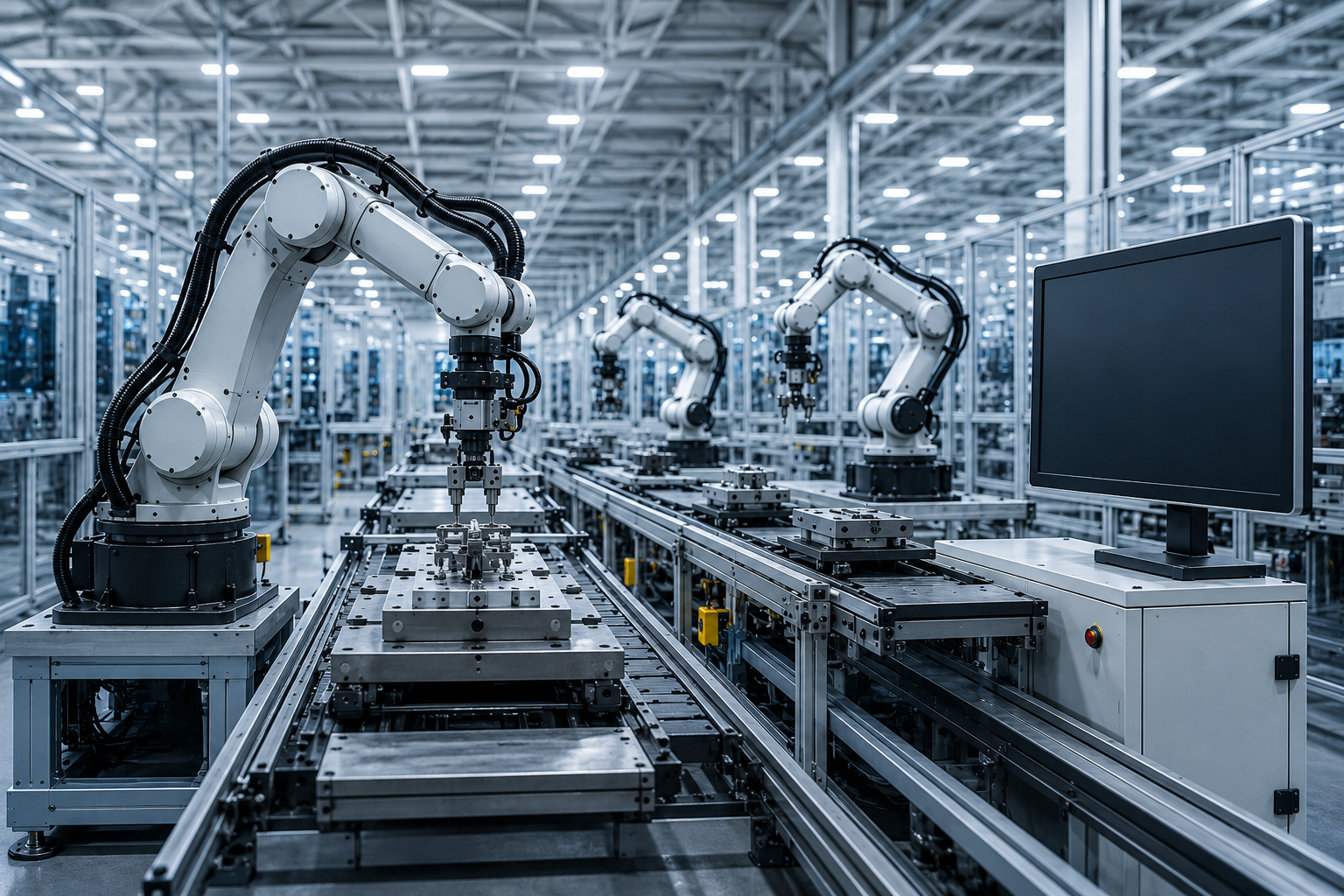
Today’s industrial production relies on industrial automation sensors as the key means through which productivity and precision can be improved and made more efficient in the manufacturing process. The function of these sensors is as the “eyes and ears” of the automated process, whereby these devices detect various elements of industrial automation. Using either inductive, capacitive, laser, or photoelectric technology, industrial sensors supply the necessary information required for machine intelligence.
Industrial automation sensors are vital to the machine since they enable it to know what is going on at each stage of the process, as well as control it with precision. In other words, without these devices, automated control processes would not be possible. Such sensors continually interact with PLCs, robot controllers, HMIs, and industrial controllers. Today’s industrial sensors are designed to work under rough environmental conditions that feature presence of dust, vibration, water, oil, and electromagnetic interference. These sensors are commonly used in conveyors, robotic assembly lines, packing machines, inspection equipment, material handling devices, and intelligent manufacturing processes. Strategi Automation specializes in providing complete solutions for industrial automation sensors that meet the needs of various industrial environments. We provide sensors that ensure reliable operation, high precision detection, and long service life.
Types of Industrial Automation Sensors
Laser Displacement Sensor
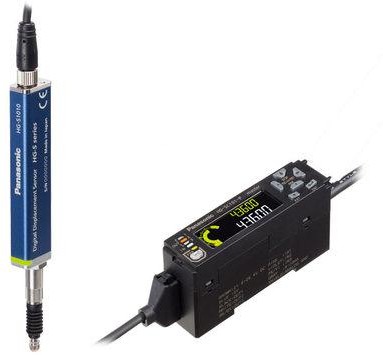
A laser displacement sensor is an industrial high-precision measuring device. This device is used to measure displacements, heights, distances, and thickness using laser. They are commonly used where high-speed and high-precision measurements are essential in automation applications. Laser displacement sensors provide consistent and reliable measurement in industrial environments and are widely employed in automated inspections and manufacturing processes.
Measurement Sensor
These sensors are used to monitor dimensional and industrial measuring. The use of these sensors ensures accurate measurements within automated machinery through constant observation of dimensions and positioning of the products manufactured. Measurement sensors play an essential role in industries where monitoring is critical for ensuring quality of manufacturing processes.
Photoelectric Sensor
Photoelectric sensors belong to the most popular types of industrial automation sensors. The function of these sensors is based on detecting the presence, motion, or location of an object through light beams. There are several ways to configure photoelectric sensors depending on industrial applications. Photoelectric sensors can be applied to conveyors, packaging machines, assembly lines, and automated production systems.
Fibre Sensor
Fibre sensors, sometimes referred to as fibre optic sensors, are small sensing devices that detect precisely in small areas. Fibre sensors utilize fibre optics technology to detect accurately when conventional sensors cannot be used. The fibre sensor is very appropriate for use in compact automation devices, electronics production, and precise industrial machines that need accurate detection.
Pressure Sensor
Pressure sensors are considered as very important industrial sensors as these are used for detecting pressure of gases, air, and liquids in an industrial system. These sensors are responsible for measuring pressure levels. Pressure sensors are used in a wide range of industries such as hydraulic, pneumatics, fluid handling systems, and mechanical systems where constant pressure is required.
U-Shaped Micro Photoelectric Sensor
The U-shape micro photoelectric sensors are industrial sensors which come in a U-shape design to detect smaller objects in fast automation processes. The transmitter and receiver are integrated together into one compact form due to their unique shape in these sensors. These sensors are used in machines that require fast detection of smaller objects. They are used in machinery, electronics, labeling and industries.
Area Sensor / Bin Picking Sensor
The area sensor and bin picking sensor are advanced industrial sensing devices employed for robotics automation and intelligent manufacturing applications. These sensors enable the detection of object positions and movements, facilitating the automated operation of robots for picking tasks. They have found extensive applications in robotic systems, automated warehouses, industrial material handling, and intelligent manufacturing applications.
Importance of Industrial Sensors in Automation
The Industrial Automation Sensors are vital for ensuring efficiency and intelligence in industry operations. They help monitor the ongoing activities in real time, enhance machine accuracy, minimize mistakes in manufacturing, and facilitate automation decision-making.
Sensors enable industries to:
• Conduct accurate machine operations
• Conduct fast production operations
• Contribute to less downtime
• Contribute to increased safety
• Contribute to higher-quality production
• Enhance automation success
With industries increasingly integrating Industry 4.0 technologies, sensors have played a crucial role in ensuring intelligent factory operation.
Industrial Sensor Solutions by Strategi Automation
Strategi Automation is the best choice for providing all kinds of industrial sensors for diverse sectors. We can offer the following services:
• Correct selection of industrial sensors and their installation
• Analysis of sensing needs based on applications
• Provision of high-end industrial sensors
• Installation and PLC integration assistance
• Optimization for accurate sensing performance
• Troubleshooting services and maintenance tips
At Strategi Automation, we aim to provide reliable industrial automation sensors.
Conclusion
Sensors used in industrial automation form the very heart of modern-day industrial processes. These include laser displacement sensors, measurement sensors, photoelectric sensors, fibre sensors, and pressure sensors, among others. Each of these sensors contributes immensely towards making the process intelligent, increasing accuracy, improving safety, and ensuring optimal industrial processing. With the continued growth in automation technologies, industrial sensors will continue to form an integral part of the future of manufacturing industries.