
17 Dec Energy-Efficient Automation for Green Manufacturing
Building Sustainable, High-Performance Factories
Manufacturing sustainability now encompasses efficiency, resilience, and long-term profitability rather than merely compliance. At the core of green manufacturing is energy-efficient automation, which allows factories to cut energy use without sacrificing high output, accuracy, or dependability.
How Automation Reduces Energy Waste in Manufacturing
Even in idle or low-load situations, traditional manufacturing processes frequently use energy continuously. Intelligent control is introduced by automation, guaranteeing that machines run only when necessary.
Important energy-saving techniques consist of:
During idle cycles, automatic shutdown systems reduce unnecessary energy use. Motor speed is adjusted based on load requirements, while optimized motion paths minimize needless movement. Additionally, regenerative energy from servo and drive systems is recovered and reused. Together, these enhancements lead to measurable reductions in power consumption across the production floor.
Key energy-saving techniques:
Regenerative energy recovery in servo and drive systems
Automatic shutdown during idle cycles
Load-based motor speed control
Optimized motion paths to reduce unnecessary movement
Smart Motion Control for Energy Efficiency
Among the manufacturing sector’s biggest energy users are motion systems. Innovative motion control systems increase productivity by:
Using AC geared motors and high-efficiency servo
Minimizing losses from acceleration and deceleration
Multi-axis movement synchronization for maximum power consumption
Utilizing regenerative drives to reuse braking energy
In addition to saving energy, smart motion control extends the life and enhances machine performance.
Role of Robotics in Green Manufacturing
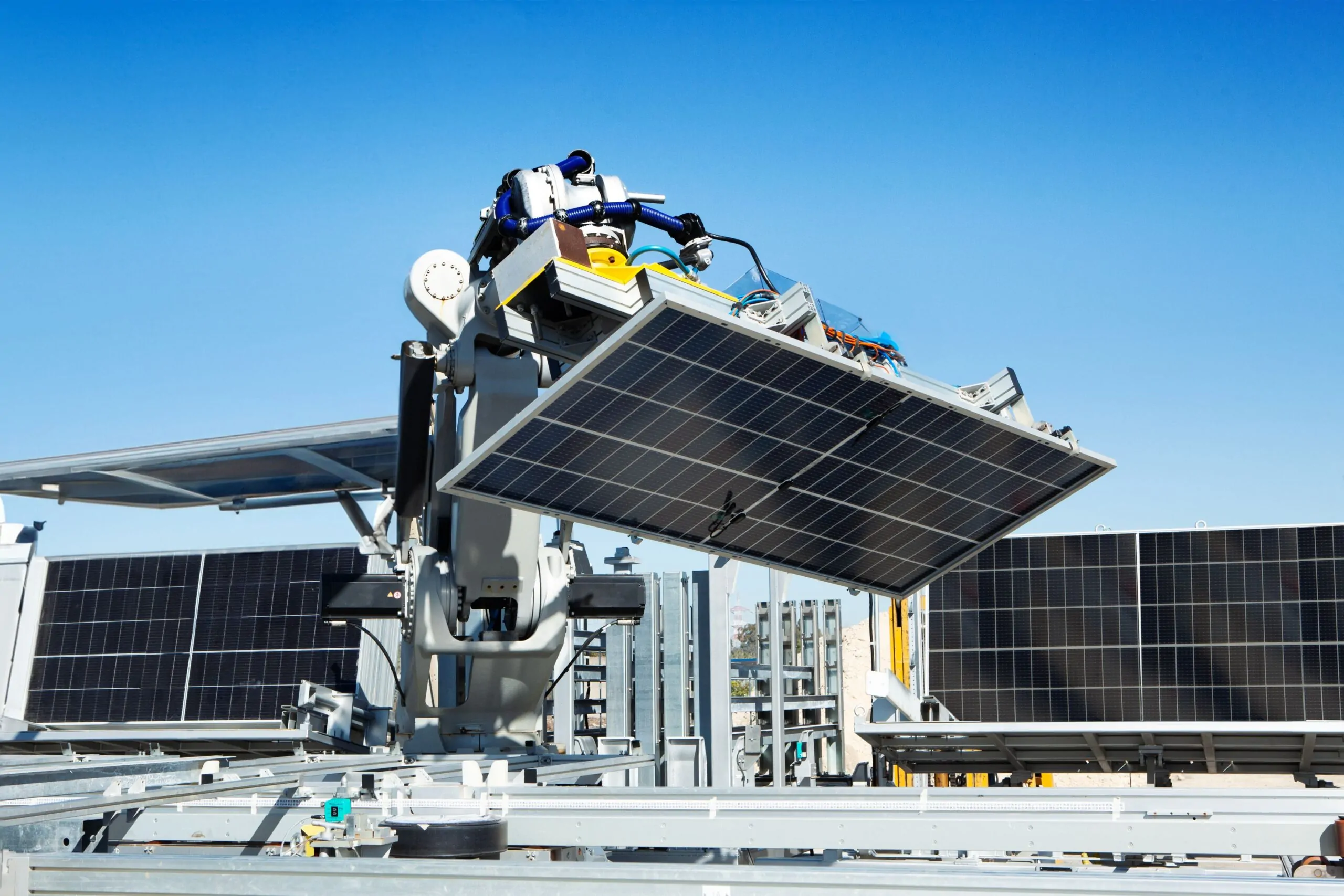
Robotic automation plays a vital role in sustainable manufacturing. Modern industrial robots are designed to operate with lower power consumption while maintaining consistent cycle times and minimizing material waste. Their precise handling capabilities significantly reduce scrap and rework, improving overall production efficiency. Additionally, robots optimize energy usage, enabling lights-out manufacturing and further reducing environmental impact.
A key component of sustainable production is robotic automation. Contemporary robots are made to:
Use less power when operating
Keep cycle times constant and waste to a minimum.
Reduce scrap and rework by using precise handling
Optimize energy consumption to enable lights-out manufacturing
IIoT and Data-Driven Energy Optimization
Industrial Internet of Things (IIoT) platforms provide real-time visibility into energy consumption across machines, production lines, and entire plants. These systems enable manufacturers to continuously monitor energy usage, identify processes with excessive energy losses, and apply predictive maintenance to prevent energy-intensive failures. In addition, data-driven insights support informed decision-making to improve overall energy efficiency.
Advantages consist of:
Constant observation of energy usage
Finding processes with high energy loss
Predictive maintenance to prevent energy-consuming malfunctions
Data-driven choices for energy efficiency
Manufacturers can transition from reactive energy management to proactive sustainability strategies by utilizing IIoT.
Eco-Friendly Automation Throughout the Manufacturing Process:
Automation that uses less energy promotes sustainability at every level:
Energy-efficient machine layouts during the design phase
Stage of production: Lower waste and power usage
Stage of maintenance: Reduced downtime and longer equipment life
Stage of expansion: Energy-spike-free, scalable automation
This lifecycle approach guarantees that sustainability is integrated into the factory rather than added after the fact.
Getting Ready for Green Manufacturing’s Future
Manufacturers need to reconsider how energy is used on the shop floor due to growing energy costs and more stringent environmental regulations. Industries can move toward intelligent, sustainable, and networked manufacturing ecosystems thanks to energy-efficient automation.
No Comments