09 Jul Role of Manufacturing Execution System (MES) in today’s factories
Role of Manufacturing Execution System (MES) in today’s factories
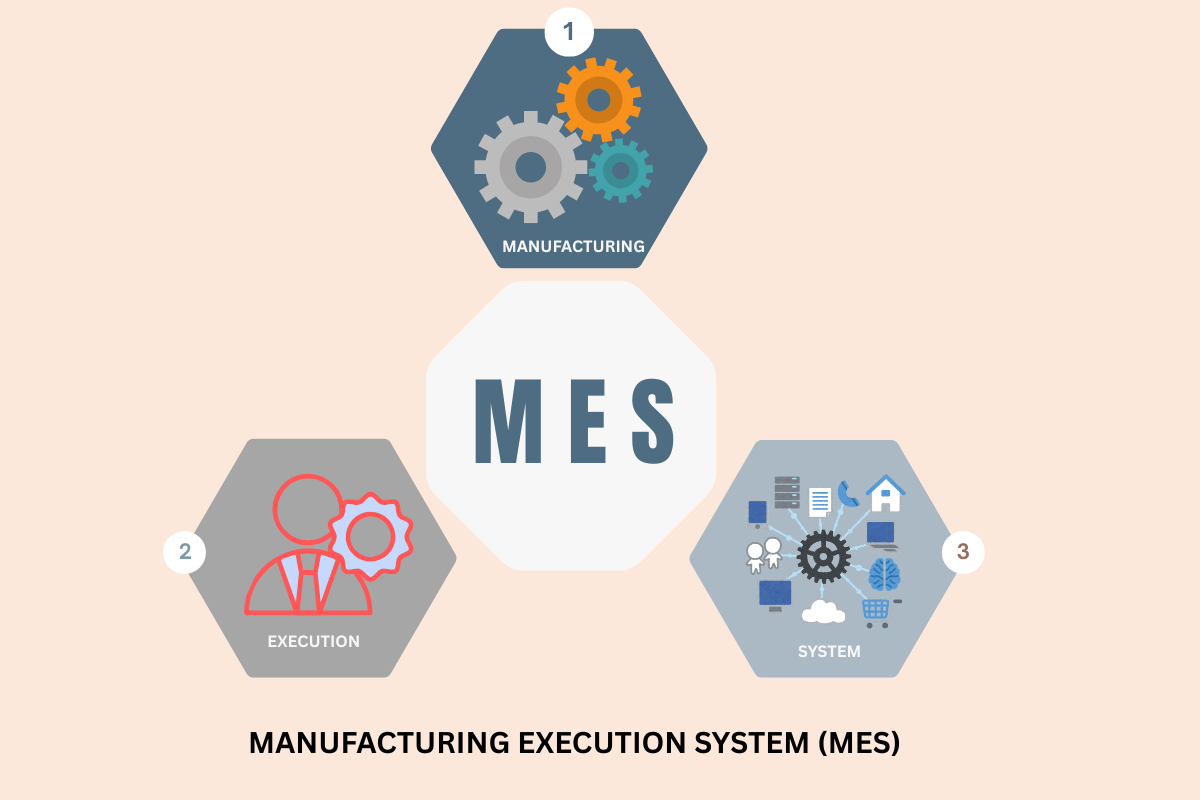
In today’s dynamic and digitally-driven manufacturing environment, the Manufacturing Execution System (MES) has emerged as a critical component for achieving operational excellence. MES acts as a bridge between the top-floor business systems (like ERP) and the shop-floor operations, offering real-time visibility, control, and optimization of manufacturing processes. Its role has evolved from a simple tracking system to a comprehensive platform that empowers factories with data-driven decision-making and seamless production execution.
Modern factories are under constant pressure to improve productivity, reduce downtime, ensure quality, and meet customer demands swiftly. MES helps achieve these goals by enabling real-time monitoring of production activities, workforce efficiency, machine utilization, inventory levels, and quality assurance measures. It captures and analyzes data from various sources on the shop floor, allowing managers to identify bottlenecks, trace product genealogy, and respond swiftly to disruptions.
One of the most significant contributions of MES is its ability to enforce production standards and ensure compliance. It guides operators through step-by-step instructions, maintains digital records for audits, and reduces human errors through automation. Additionally, MES plays a pivotal role in smart manufacturing and Industry 4.0 by integrating with IoT devices, robotics, and AI tools, enabling predictive maintenance and autonomous operations.
As factories become increasingly automated and complex, MES systems provide the agility needed to respond to market changes, manage customized production orders, and maintain high levels of efficiency. In essence, MES transforms traditional manufacturing into a connected, intelligent, and responsive system that drives innovation and competitiveness in the global market.
In today’s hyper-competitive and fast-paced industrial landscape, the Manufacturing Execution System (MES) plays a mission-critical role in bridging the gap between enterprise-level planning and shop-floor execution. Acting as the digital backbone of a smart factory, MES ensures that every aspect of production is monitored, optimized, and aligned with business objectives in real time.
MES allows manufacturers to manage production activities more efficiently by delivering real-time data from machines, operators, and workflows. This enables better scheduling, quicker decision-making, reduced errors, and higher throughput. Whether the goal is to improve productivity, ensure regulatory compliance, or enable traceability, MES brings clarity, control, and coordination to the shop floor.
🔑 Key Features & Specifications of MES
Here are some of the core features and capabilities of a modern MES:
- Real-Time Data Collection: Monitors and captures machine performance, production status, operator inputs, and quality data in real time.
- Production Scheduling & Dispatching: Optimizes schedules and ensures timely delivery of job orders to workstations.
- Resource & Inventory Management: Tracks raw materials, WIP, and finished goods inventory to avoid shortages or excess.
- Quality Control & Compliance: Enables automated quality checks, defect tracking, and audit-ready documentation.
- Traceability & Genealogy: Tracks every part of the production process for complete product history and regulatory compliance.
- Downtime & OEE Monitoring: Identifies bottlenecks and inefficiencies through downtime tracking and Overall Equipment Effectiveness (OEE) analysis.
- Integration with ERP/SCADA/PLC/IoT: Ensures seamless data exchange with business systems and operational equipment.
- Paperless Documentation: Digitizes SOPs, checklists, and work instructions for efficient operator guidance.
✅ Pros of Using MES in Today’s Factories
- Improved Productivity: Live insights help reduce idle time, optimize workflows, and increase output.
- Real-Time Decision Making: Immediate access to accurate data allows managers to respond quickly to disruptions.
- Enhanced Quality Control: MES enforces consistent quality standards and identifies defects early.
- Complete Traceability: Ensures visibility across the entire manufacturing lifecycle, crucial for audits and recalls.
- Reduced Waste and Downtime: Continuous monitoring helps eliminate inefficiencies and improve asset utilization.
- Scalability: Easily adaptable to different production models—batch, continuous, or discrete manufacturing.
⚠️ Cons of Implementing MES
- High Initial Investment: Upfront costs for software, hardware, and integration can be significant.
- Complex Implementation: MES setup can be complex and time-consuming, especially in legacy environments.
- Training Requirements: Workforce needs proper training to effectively use and manage MES tools.
- Customization Challenges: Off-the-shelf MES solutions may require customization to fit specific production processes.
- Dependence on System Availability: In case of system downtime, manufacturing visibility may be temporarily lost.
Final Thoughts
The Manufacturing Execution System is no longer a luxury but a necessity in today’s digital factories. It offers a comprehensive framework to drive production efficiency, ensure compliance, and maintain competitive agility. While the initial investment and learning curve can be challenges, the long-term benefits of improved transparency, control, and responsiveness far outweigh the cons. As industries continue to embrace smart manufacturing, MES will be the foundation that supports scalable, data-driven growth.
No Comments